

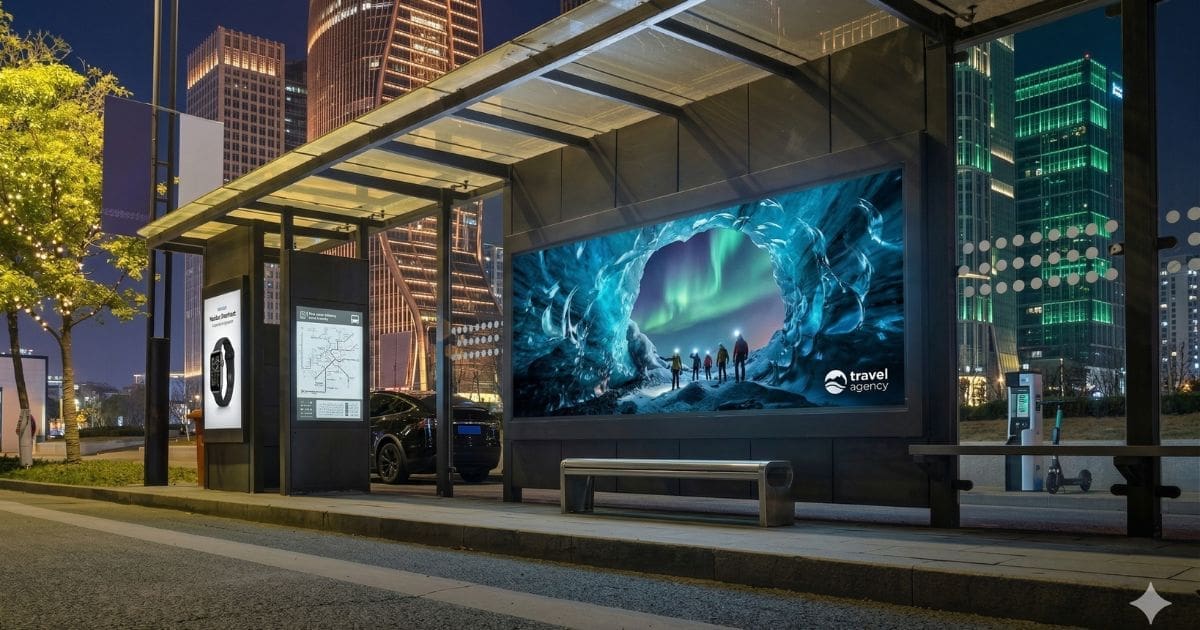
While the Canadian advertising market continues its steady growth driven by digital media, Out-of-Home (OOH) advertising is holding strong and making real progress. It stands out as one of the few traditional media channels showing consistent annual growth of around 3.5%. Having surpassed its pre-pandemic levels in 2025, the medium owes this vitality to the massive shift of its inventory to digital (DOOH—Digital Out-of-Home).
Long viewed as the ultimate traditional medium, outdoor advertising is undergoing a deep transformation. New technologies are boosting its engagement and reach, making it more impactful than ever. Now accounting for over two-thirds of all industry spending, DOOH does more than just occupy space: it listens, analyzes, and responds in real time. Digital screens have become smart touchpoints, capable of adjusting their messaging based on the weather, crowd mood, or traffic conditions.
While digital offers this new agility, traditional print advertising keeps its raw power. Its strong, uninterrupted physical presence can saturate urban spaces, giving brands an exclusive share of voice that no algorithm can hide.
But the real revolution is invisible. Thanks to programmatic buying, brands are no longer just purchasing a location—they are reaching a specific audience at the perfect moment. By combining mobility data with Retail Media, outdoor advertising is finally bridging the historic gap between brand awareness and in-store purchases.
OOH, DOOH, PDOOH: A Technological Transformation
The market is heading toward a future where digital is no longer an option, but the standard. While traditional (print) billboards are growing at a modest rate of 0.5% (CAGR), the digital segment (DOOH) is booming with an annual growth rate of 8.0%.
OOH
(Static)
Strategic Role
Authority: 100% share of voice, 24/7 presence.
Psychological Asset & Performance
Perceived as more trustworthy by 22% of consumers.
DOOH
(Digital)
Strategic Role
Innovation: Video quality, creative flexibility.
Psychological Asset & Performance
Viewed as innovative by 33% of consumers.
PDOOH
(Programmatic)
Strategic Role
Relevance: Real-time triggers (weather, traffic).
Psychological Asset & Performance
Delivers location-relevant ads for 24% of consumers.
Campaign Examples from Espace M
Boréale: Turning a Billboard into a Hot Topic
The “Je bois local Mon Donald” stunt is a perfect example of synergy between real life and the web. Espace M’s strategy was to turn a physical placement into a national digital event.
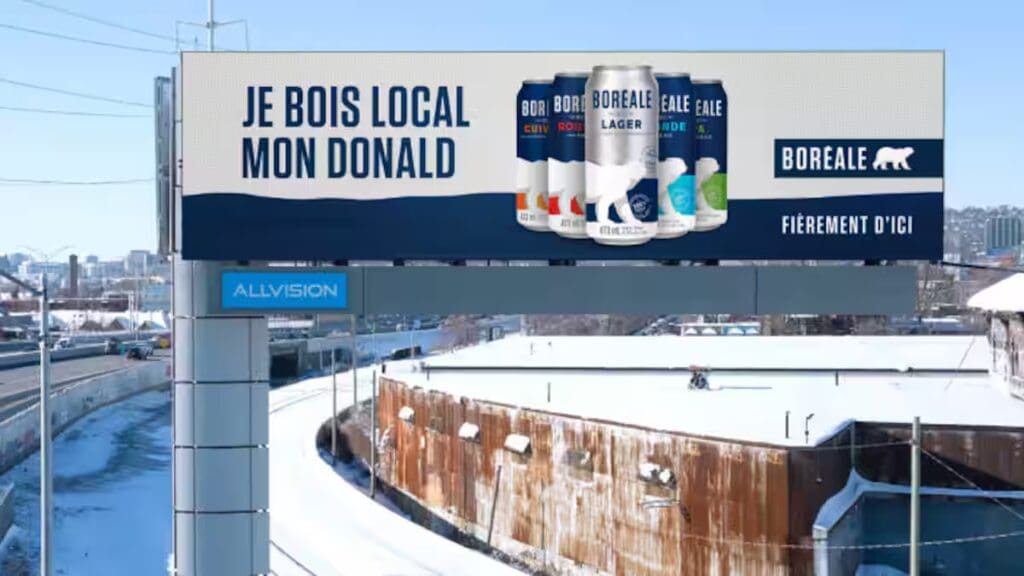
- The leverage: With an initial investment under $30,000, the campaign generated nearly $140,000 in total media value.
- Contextual visibility: The billboards were supported by dynamic banner ads on La Presse targeting keywords tied to tariff news, reaching nearly 215,000 unique users.
- Performance and recall: Perfect alignment between the ads and current events boosted brand recall by more than 25%.
- Social impact: The stunt flooded social media and online daily news, proving that a well-placed billboard can become a brand’s best organic content.
Maple from Canada (PPAQ): Impact Through Demonstration
Billboards grab attention, but digital video and TV build emotion. At Espace M, we sync these touchpoints for full immersion. That was the approach taken for the “Not Just for Breakfast” campaign, which aimed to overcome skepticism among Ontario consumers.

- The Showstopper: A massive sync across all digital billboards in Toronto’s Dundas Square.
- Video & TV takeover: The push included three 15-second video spots humorously showing that maple is “Good IN Anything.”
- Complementarity: OOH served as a visual reminder (a “how-to” guide), while video provided the culinary proof needed to drive conversions.
Kamik: Data-Driven Intelligence
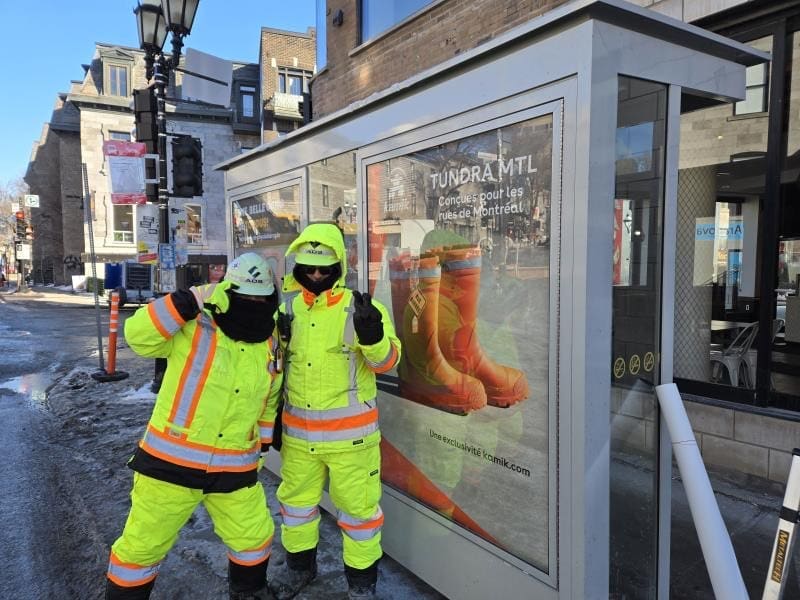
The “Rues Barrées” (Road Closed) campaign for Tundra Montréal boots relied on predictive analysis of city construction sites to sync ad displays with active work zones. This clever relevance turned a daily urban frustration into viral online content that even landed on national TV news.


Haiku: Just-in-Time Influence
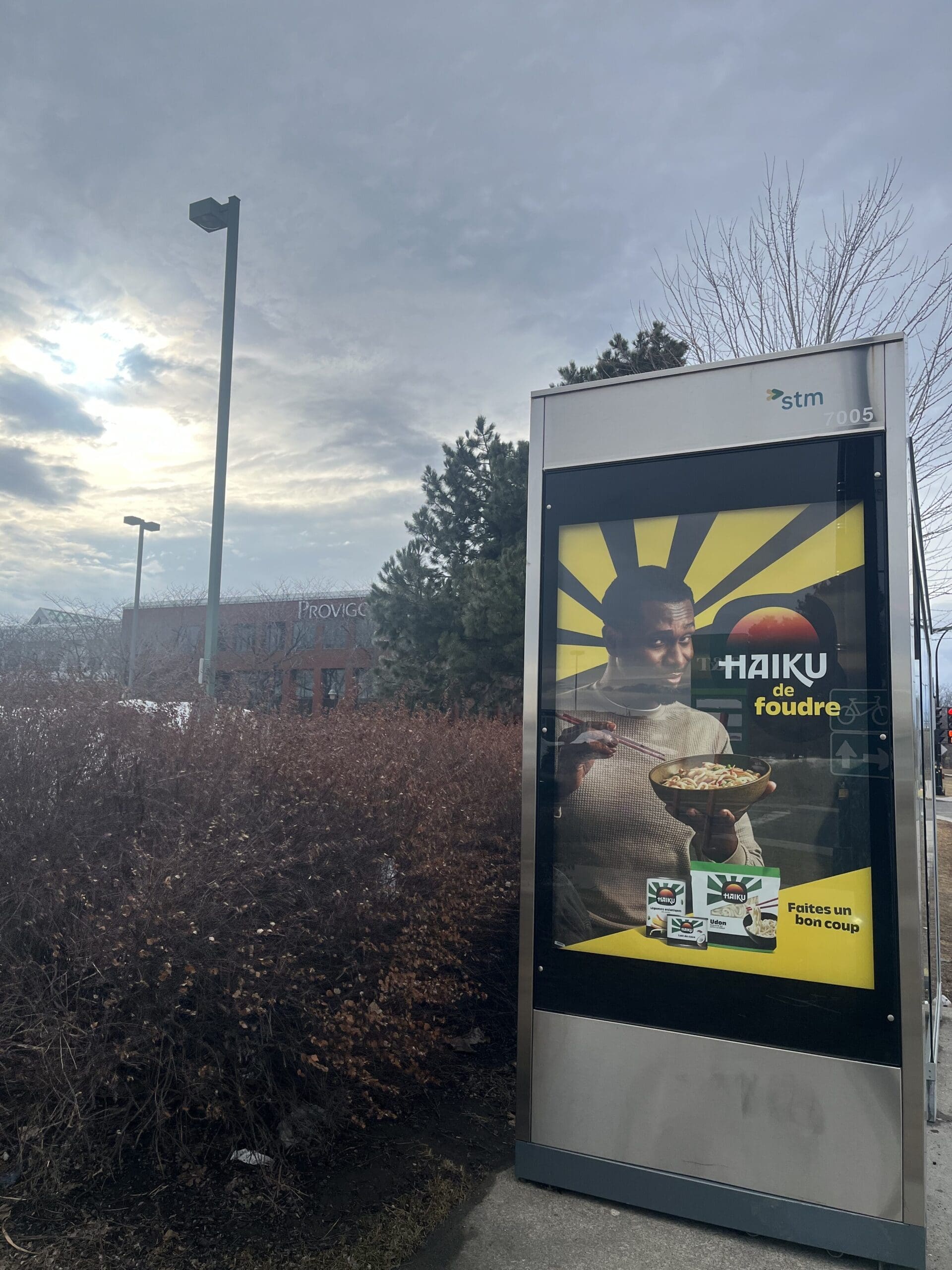
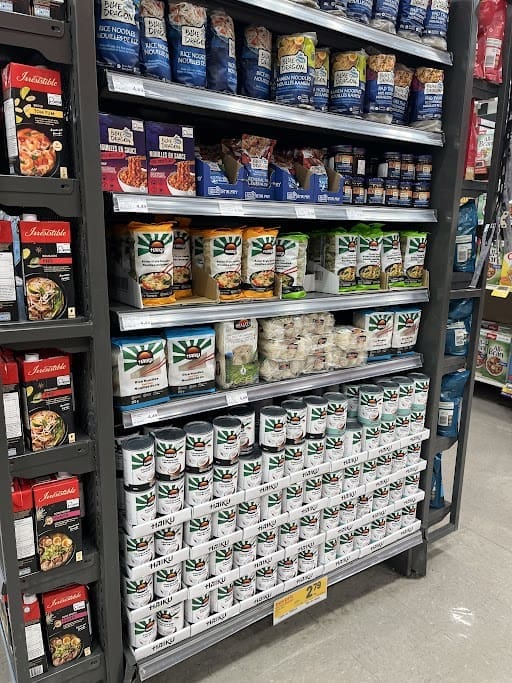
The Haiku brand refresh campaign clearly demonstrates this strategy for driving conversions. By placing ads along the path to the store, outdoor media accomplished a dual tactical goal:
- B2B influence: Target grocery buyers along their daily commutes to build brand credibility and boost shelf placement.
- Consumer conversion: Reach shoppers right where they buy to remove the intimidation around Asian cooking and encourage immediate trial (“Make a great move”).
This proximity strategy kept the brand top-of-mind all the way to the store entrance, turning urban visibility into a concrete, measurable sales driver.
Espace M Expertise: Turning Innovation into Impact
Navigating this complex landscape takes more than just buying ad space—it calls for the vision of a media architect. At Espace M, our approach rests on three core pillars:
- Contextual relevance: Use real-time data (weather, traffic, construction) so the message resonates with the audience’s immediate reality;
- Multi-channel synergy: Orchestrate outdoor ads so they amplify investments in digital video, TV, and the web;
- Performance measurement: Turn visual impressions into tangible, measurable business results.
In a crowded media landscape where the value of human attention keeps rising, outdoor advertising stands out as a unique anchor, guaranteeing a strong, shared physical presence along our daily routes.
Ready to build your next breakthrough campaign and dominate public space with the Espace M team? [Contact our experts today]
Sources & References:
- [1] Statista Market Insights (Oct. 2024 & Nov. 2025): Out-of-Home Advertising market data & analysis.
- [2] COMMB (2026): Canadian out-of-home industry revenue data.
- [3] Espace M Performance Reports: Boréale (2025), Kamik (2025), PPAQ (2024–2026), Centraide (2025), Haiku (2025).
- [4] Kantar (2022): Opinions on out-of-home advertising.
- [5] Comscore (2025): Media Trend La Presse.